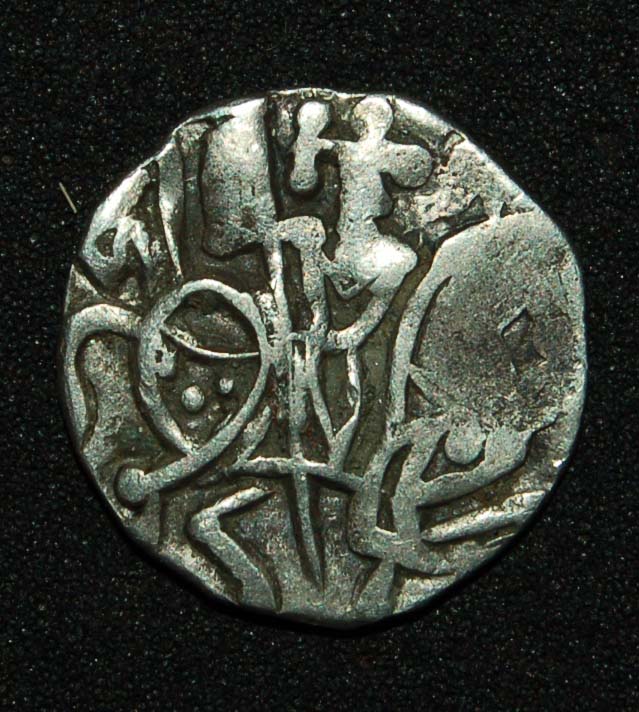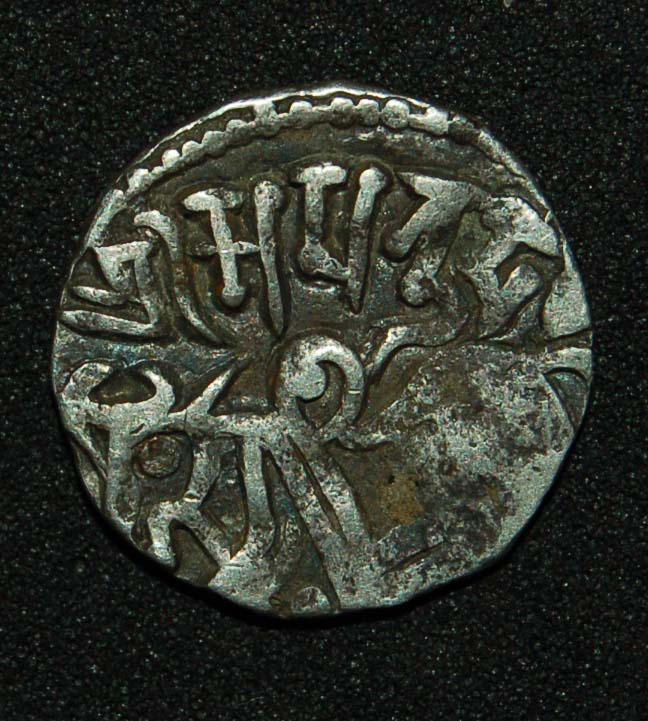


SHAHI, "Samanta Deva," c. 850-1000 AD
Type :- Samanta Deva Hindu Shahi of Kabul
Year :- 850-1000 AD (9th Century) Silver jital
Metal :- 91.7% Silver
Edge :- Reeded.
Mint :- Ohind (Udabhandapura)
Obverse :- Recumbent Bull, Script Shri Samanta Deva
Reverse :- Horseman with spear in his hand ,Symbol on the right not clear.
During 717 to 920 AD the Kabul valley, Zabul and Gandhara, till river Sindhu or Indus, (modern Afghanistan and Pakistan) was occupied by Turko-Hephthalic kings. Because of spread of Hinduism in these kingdoms, these dynasties were popularly known as `Hindu Shahis of Kabul and Gandhara'. At this time Arabs united under banner of Islam and made many advances on Shah of Kabul and Ratbil of Zabul. Ratbils succumbed to muslims after brave struggle in 870 AD. Shah of Kabul, a proud desecendent of Great Kushan emperor, Kanishka, maintained his kingdom till the end of ninth century and later replaced by Kallar or Lalliyas who founded Hindu Shahiya dynasty of Udabhandapura (Ohind or WaiHind or Und).
This Brahmanical Shahi minted interesting coins, called `bull and horseman' type coins which were later adopted by many post-Gupta dynasties including all Rajput kings (an example of Chauhan dynasty is shown below). Interestingly, these coins were also widely used as prototype by all muslim conquerors and rulers of North-west part of India which include Mahmud of Ghor. These coins were first minted by Spalapati Deva in mid-ninth century. Later on the Samanta Deva coinage was used as prototype for increasingly debased coinage struck by many dynasties. Shown above is a fine example of coin of this dynasty. The reverse of these well-executed silver coins display a recumbent bull partly draped with an ornamental cloth and stamped with the mark of trident on his rear flank. Above is the legend, "Shri Samanta Deva". On the obverse is a horseman who holds a long spear with legend "Bhi" on left margin.
Year :- 850-1000 AD (9th Century) Silver jital
Metal :- 91.7% Silver
Edge :- Reeded.
Mint :- Ohind (Udabhandapura)
Obverse :- Recumbent Bull, Script Shri Samanta Deva
Reverse :- Horseman with spear in his hand ,Symbol on the right not clear.
During 717 to 920 AD the Kabul valley, Zabul and Gandhara, till river Sindhu or Indus, (modern Afghanistan and Pakistan) was occupied by Turko-Hephthalic kings. Because of spread of Hinduism in these kingdoms, these dynasties were popularly known as `Hindu Shahis of Kabul and Gandhara'. At this time Arabs united under banner of Islam and made many advances on Shah of Kabul and Ratbil of Zabul. Ratbils succumbed to muslims after brave struggle in 870 AD. Shah of Kabul, a proud desecendent of Great Kushan emperor, Kanishka, maintained his kingdom till the end of ninth century and later replaced by Kallar or Lalliyas who founded Hindu Shahiya dynasty of Udabhandapura (Ohind or WaiHind or Und).
This Brahmanical Shahi minted interesting coins, called `bull and horseman' type coins which were later adopted by many post-Gupta dynasties including all Rajput kings (an example of Chauhan dynasty is shown below). Interestingly, these coins were also widely used as prototype by all muslim conquerors and rulers of North-west part of India which include Mahmud of Ghor. These coins were first minted by Spalapati Deva in mid-ninth century. Later on the Samanta Deva coinage was used as prototype for increasingly debased coinage struck by many dynasties. Shown above is a fine example of coin of this dynasty. The reverse of these well-executed silver coins display a recumbent bull partly draped with an ornamental cloth and stamped with the mark of trident on his rear flank. Above is the legend, "Shri Samanta Deva". On the obverse is a horseman who holds a long spear with legend "Bhi" on left margin.